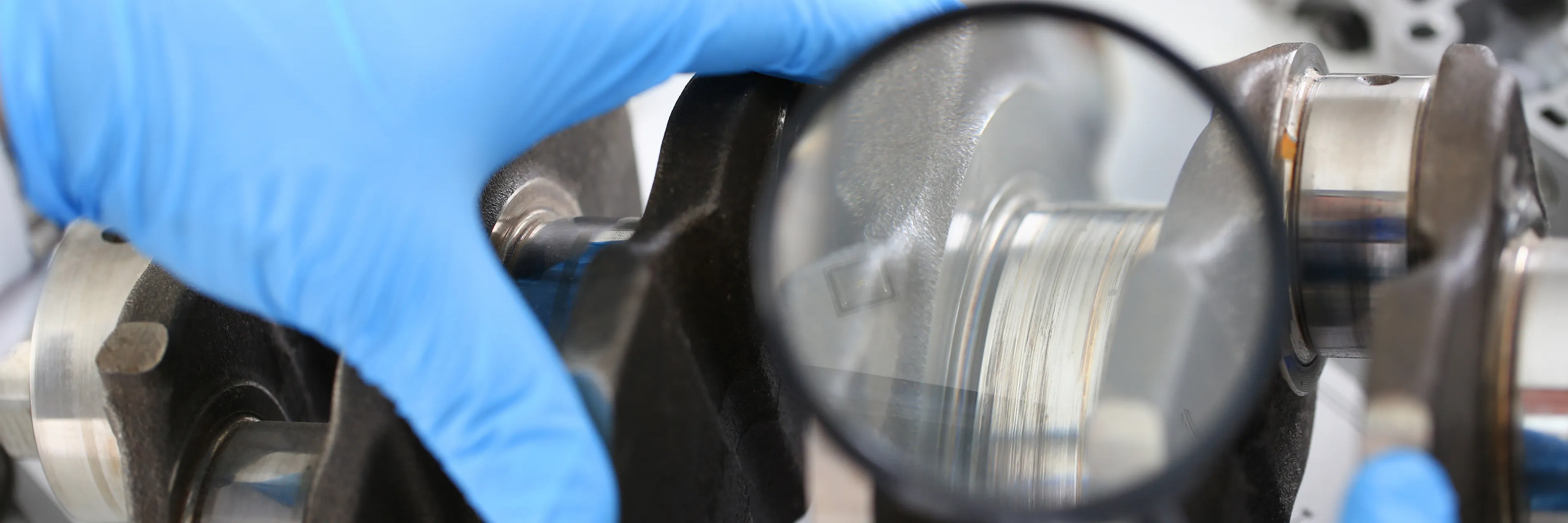
Crankshaft position sensor problem, or bad engine timing?
That one question can turn a simple check engine light into an expensive guessing game. A bad crankshaft position sensor can cause no start, stalling, misfires, rough idle, poor acceleration, or a sudden drop in RPM signal, but those same symptoms can also show up when the timing chain wears, the camshaft crankshaft correlation is off, or a cam crank correlation code points deeper into the timing system. Replace the sensor too soon, and you may leave the real problem untouched.
What Does the Crankshaft Position Sensor Do?
The crankshaft position sensor is the engine’s reference point for crankshaft speed and position. Without that signal, the computer loses the timing information it needs for spark, fuel injection, RPM reading, and misfire detection.
Think of the crankshaft as the part that tells the engine where the pistons are. The sensor reads that movement and sends it to the computer, which then decides when to fire the spark plugs and inject fuel. If the signal gets weak, drops out, or disappears, the engine may crank too long, stall, or fail to start.
It also works with the camshaft position sensor. The computer compares both signals to understand how the crankshaft and camshaft are moving together, which becomes important later when timing-related codes enter the picture.

Bad Crankshaft Position Sensor Symptoms
A bad crankshaft position sensor often shows up as a starting problem first. The engine may crank longer than usual, start only after several tries, or refuse to start at all because the computer is not getting a clean crankshaft position signal.
Stalling is another strong clue. Some failing sensors work when cold and drop out when hot, so the car may start fine, run for a while, then die at a stoplight or while slowing down. After it cools, it may start again, which makes the problem feel random.
Misfires, rough idle, poor acceleration, and a check engine light can also come with a weak or erratic signal. If the RPM needle drops suddenly, the tachometer reads zero while the engine is still turning, or the scan tool shows a missing RPM signal during cranking, the crankshaft sensor becomes a stronger suspect.
Why a Bad Sensor Can Look Like a Timing Issue
A bad crankshaft position sensor can look like a timing issue because the computer uses that signal as a reference. If the signal is weak, delayed, missing, or noisy, the computer may read the crankshaft position wrong and compare it poorly against the camshaft position sensor.
That bad comparison can create symptoms that feel mechanical. The engine may misfire, idle rough, lose power, or set a cam crank correlation code even when the timing chain has not physically jumped. From the driver’s seat, it just feels like the engine is out of sync.
The reverse can happen too. A stretched timing chain, worn tensioner, damaged reluctor wheel, or real camshaft crankshaft correlation problem can make the sensor look suspicious even when it is only reporting what it sees. That is why a timing issue and a sensor issue should not be separated by guesswork alone.
Sensor Problem vs. Timing Problem: How to Tell
The pattern matters more than one symptom. A crankshaft position sensor problem often acts electrical: the engine may stall randomly, restart after cooling down, lose RPM signal during cranking, or set a crankshaft sensor code without much mechanical noise.
A timing problem usually leaves a different trail. Rattle on startup, repeated camshaft crankshaft correlation codes, poor power across the RPM range, or timing chain problem symptoms point more toward chain stretch, a weak tensioner, or a mechanical timing issue.

Use the table below as a quick way to separate the two:
|
What you notice |
More likely sensor-related |
More likely timing-related |
|
No start or hard start |
Missing RPM signal, weak sensor signal, wiring or connector issue |
Timing chain jumped, severe timing mismatch |
|
Random stalling |
Sensor drops out when hot, signal cuts in and out |
Less common unless timing is badly off |
|
Rough idle or misfire |
Erratic crankshaft position sensor signal |
Camshaft crankshaft correlation problem, chain stretch |
|
Rattle on startup |
Usually not sensor-related |
Timing chain noise, worn tensioner, guide wear |
|
Related codes |
P0335, P0336, crankshaft sensor code |
P0008, P0016, P0017, P0018, cam crank correlation code |
A bad sensor can still set confusing symptoms, and a timing problem can still look electrical at first. The goal is not to guess from one sign; it is to see whether the pattern points toward signal loss or mechanical timing drift.
Codes That May Involve the Crankshaft Position Sensor
Crankshaft sensor problems can show up through two kinds of codes: direct sensor codes and timing correlation codes. Direct codes, such as P0335 and P0336, focus on the crankshaft position sensor circuit or signal. Correlation codes, such as P0016 or P0008, use crankshaft position data but may also involve the camshaft sensor or the timing system.
P0335 usually means the engine computer is not seeing the crankshaft position signal the way it expects. The cause could be a bad crankshaft position sensor, damaged wiring, a loose connector, a damaged reluctor wheel, or a signal dropout during cranking.
P0336 is more about signal range or performance. The sensor may still be producing a signal, but the pattern may be erratic, noisy, or outside the expected range. In that case, the problem could still be the sensor, wiring, connector, or reluctor wheel.
P0016 and P0008 need more care. They can use crankshaft position data, but they don’t automatically mean the crankshaft position sensor is bad. If those codes appear with timing chain noise, camshaft codes, or poor engine timing, the timing system needs to be checked before replacing the sensor.
What to Check Before Replacing the Crankshaft Position Sensor
Do not start with the part. Start with the signal.
A crankshaft position sensor replacement makes sense only after the basics are checked: the wiring, connector, sensor mounting, reluctor wheel, and RPM signal during cranking. A loose connector or damaged wire can create the same symptoms as a bad crankshaft position sensor, and a damaged reluctor wheel can give the sensor a bad pattern even when the sensor is still working.
Use an OBD2 scanner to look at live RPM while cranking. If the RPM stays at zero, drops in and out, or does not match how the engine is turning, the crankshaft position sensor signal deserves attention. If the signal looks stable but the engine still sets cam crank correlation codes, the problem may be deeper in the timing system.

When Should You Replace the Crankshaft Position Sensor?
Replace the crankshaft position sensor when the evidence points back to the sensor, not just when the engine has a rough idle or a timing-related code. A P0335 or P0336 code, missing RPM signal during cranking, damaged sensor housing, oil-soaked connector, broken wiring at the sensor, or repeated hot-stall pattern can all make replacement a reasonable move.
Replacement also makes sense after the wiring, connector, and reluctor wheel have been checked and the signal is still weak, missing, or erratic. At that point, the sensor is no longer just a guess; it is the part that keeps failing the test.
I would be more careful with P0016, P0008, or other cam-crank correlation codes. If the sensor signal is clean, replacing the crankshaft position sensor may not solve the problem. Those codes often need timing system checks before a new sensor is blamed.
FAQs About Crankshaft Position Sensor Symptoms
Can a bad crankshaft position sensor cause a no-start?
Yes. If the engine computer does not receive a usable crankshaft position sensor signal, it may not know when to fire the spark plugs or inject fuel. That can cause a long crank, intermittent no-start, or no-start condition.
Can a bad crankshaft position sensor cause P0016?
It can contribute to a P0016 code, but P0016 does not automatically mean the crankshaft position sensor is bad. P0016 is a camshaft crankshaft correlation code, so the cause may also be a camshaft position sensor issue, timing chain stretch, tensioner wear, or another timing problem.
Can a bad crankshaft position sensor cause P0008?
It is possible, but P0008 is usually treated with more caution. P0008 relates to engine position system performance on bank 1, so a bad crankshaft signal may be involved, but timing chain wear, cam timing issues, or other mechanical timing problems should also be checked.
Should I replace the crankshaft and camshaft position sensors together?
Not automatically. Replace both only if both signals test poorly, both sensors are damaged, or the vehicle has a known service pattern that supports replacing them together. Otherwise, testing first is better than replacing parts in pairs just because the codes mention both crank and cam signals.
Can you drive with a bad crankshaft position sensor?
You may be able to drive for a short time if the engine still starts and runs normally, but it is risky if the sensor signal cuts out. A failing crankshaft position sensor can cause stalling, no-start, misfires, or sudden loss of RPM signal, so the problem should be checked before regular driving.
