
A P0008 code tends to make a check engine light feel a little more serious than usual. It is not one of those simple codes where you tighten the gas cap and forget about it. This one is tied to engine timing, where the crankshaft and camshafts need to stay in sync for the engine to run correctly.
The awkward part is that the car may still run. That is why this code worries people. You can be standing in the driveway with a scanner in your hand, the engine idling, and no obvious sign that anything major is wrong. Before you decide to keep driving, it helps to know what P0008 actually means and which symptoms change it from "get it checked soon" to "stop driving."
What Does the P0008 Code Mean?
A P0008 code is set when the engine control module sees the camshaft and crankshaft timing move out of the expected range on bank 1. Many scan tools describe it as "Engine Position System Performance Bank 1." In normal language, the computer is checking whether the camshafts are still lined up with the crankshaft the way they should be.
The ECM does this by comparing camshaft position readings against a known crankshaft reference. If the camshaft/crankshaft correlation is off far enough, it stores the P0008 engine code and turns on the check engine light. The cause can be mechanical, such as timing chain wear, or it can come from oil control, VVT parts, sensors, wiring, or a timing issue after previous repair work.
Bank 1 is the side of the engine that includes cylinder 1. On V6 and V8 engines, that matters because it helps narrow the problem to one side of the engine instead of treating it as a general fault. P0008 can show up on many OBD-II vehicles, though it is talked about often on GM-related models such as Chevrolet, GMC, Cadillac, and Buick.
One thing I would not do is treat "position" in the code description as proof that a position sensor is bad. A bad camshaft or crankshaft position sensor is possible, but P0008 often points to the timing system itself.
Is a P0008 Code Serious?
Yes, P0008 deserves attention. The code deals with engine timing, not a loose cap, a small evaporative leak, or a one-time emissions reading. The crankshaft controls piston movement, while the camshafts control when the valves open and close. When that relationship drifts, the engine may still run, but it may not be running safely or efficiently.
How serious it is depends on what caused the timing to move out of range. Low or dirty oil can affect variable valve timing operation. A sticking VVT solenoid is one level of concern. A stretched timing chain, weak timing chain tensioner, worn guide, or incorrect mechanical timing is more serious because the timing can continue to drift.
This is why P0008 falls into the "do not ignore it" category. It may start with only a check engine light and no obvious drivability complaint. If the timing issue gets worse, though, the next signs can be rough running, misfires, weak acceleration, hard starting, stalling, or engine damage.
The most important clue is how the engine behaves cold. A brief metallic rattle after sitting overnight can say more than the code itself.

P0008 Code Symptoms to Watch For
A P0008 code can appear before the car feels dramatically different. In some cases, the check engine light is the only thing the driver notices at first. The engine computer may still be correcting for the timing error, or the wear may not be far enough along to create a strong symptom yet.
As the timing drifts farther out of range, the symptoms become harder to miss. The engine may idle rough, crank longer than normal, misfire under load, or feel flat when you accelerate. Fuel economy can drop too, because the valves are no longer opening and closing at the ideal time.
Noise is the symptom I would take seriously. A timing chain rattle on startup, especially a metallic rattle that appears cold and fades after a second or two, can point toward chain slack, a worn tensioner, or guide wear. If that sound shows up with a P0008 engine code, I would not keep using the vehicle as if nothing happened.
Watch especially for these signs:
- Check engine light
- Rough idle
- Long crank or hard start
- Misfire
- Poor acceleration
- Stalling
- Loss of power under load
- Timing chain rattle on cold startup
If the car has only the light and no symptoms, you have more room to plan the repair. If it has the light plus noise or drivability issues, the risk changes quickly.
Can You Drive With a P0008 Code?
You may be able to drive with a P0008 code for a short distance if the engine still starts normally, idles smoothly, and has no rattling noise, misfire, stalling, or loss of power. In that situation, I would treat the drive as a careful trip to a repair shop or back home, not another week of commuting while waiting to see what happens.
The answer changes when the engine starts acting up. Rough idle, hard starts, poor acceleration, engine misfire, stalling, or timing chain noise all point to a timing problem that is becoming harder for the engine to manage. At that point, driving can turn a repairable issue into a much more expensive one.
A loud chain rattle, repeated stalling, or heavy shaking is where I would stop driving. Those signs suggest the timing may be far enough off to risk damage, especially if the cause is a stretched timing chain, weak tensioner, or worn guide.
If the car absolutely has to move, keep it short and gentle. Avoid hard acceleration, high RPM, towing, and long highway drives. Saving a tow bill is not much of a win if the timing system fails on the way.
How Long Can You Drive With P0008?
There is not a safe mileage number for a P0008 code. One vehicle may have only a stored code and still feel normal. Another may already have timing chain noise, rough idle, or loss of power. The symptoms matter more than the distance.
If the engine runs smoothly, treat it as a short-trip situation. Drive only as far as needed to get the car inspected, and keep the load on the engine low. No hard acceleration, no high RPM pulls, no towing, and no long road trip "just to get through the weekend."
If the code comes with rattling on startup, misfires, stalling, or hard starting, do not measure the risk in miles. Those signs mean the engine timing may already be unstable. Driving farther can make the damage worse, especially when the timing chain, tensioner, or guides are involved.
A practical rule is this: if the engine sounds normal and drives normally, get it checked soon. If it sounds wrong or drives wrong, stop using it.
What Causes a P0008 Code?
Code P0008 is often tied to the timing chain. When the chain wears or loses proper tension, the camshaft and crankshaft no longer stay in the exact relationship the ECM expects. That is when the cam/crank correlation can move out of range.
The timing chain tensioner is another common suspect. A weak or slow tensioner can let the chain slacken, especially during startup. That is one reason a cold-start timing chain rattle matters. A worn guide can create the same kind of problem because the chain no longer runs as tightly or smoothly as it should.
Other causes are possible and should not be skipped. Low oil, dirty oil, wrong oil viscosity, or low oil pressure can affect variable valve timing parts. A VVT solenoid, cam phaser, or actuator can stick or respond slowly. A camshaft position sensor or crankshaft position sensor can feed the ECM bad data. Wiring and connector problems can do the same.
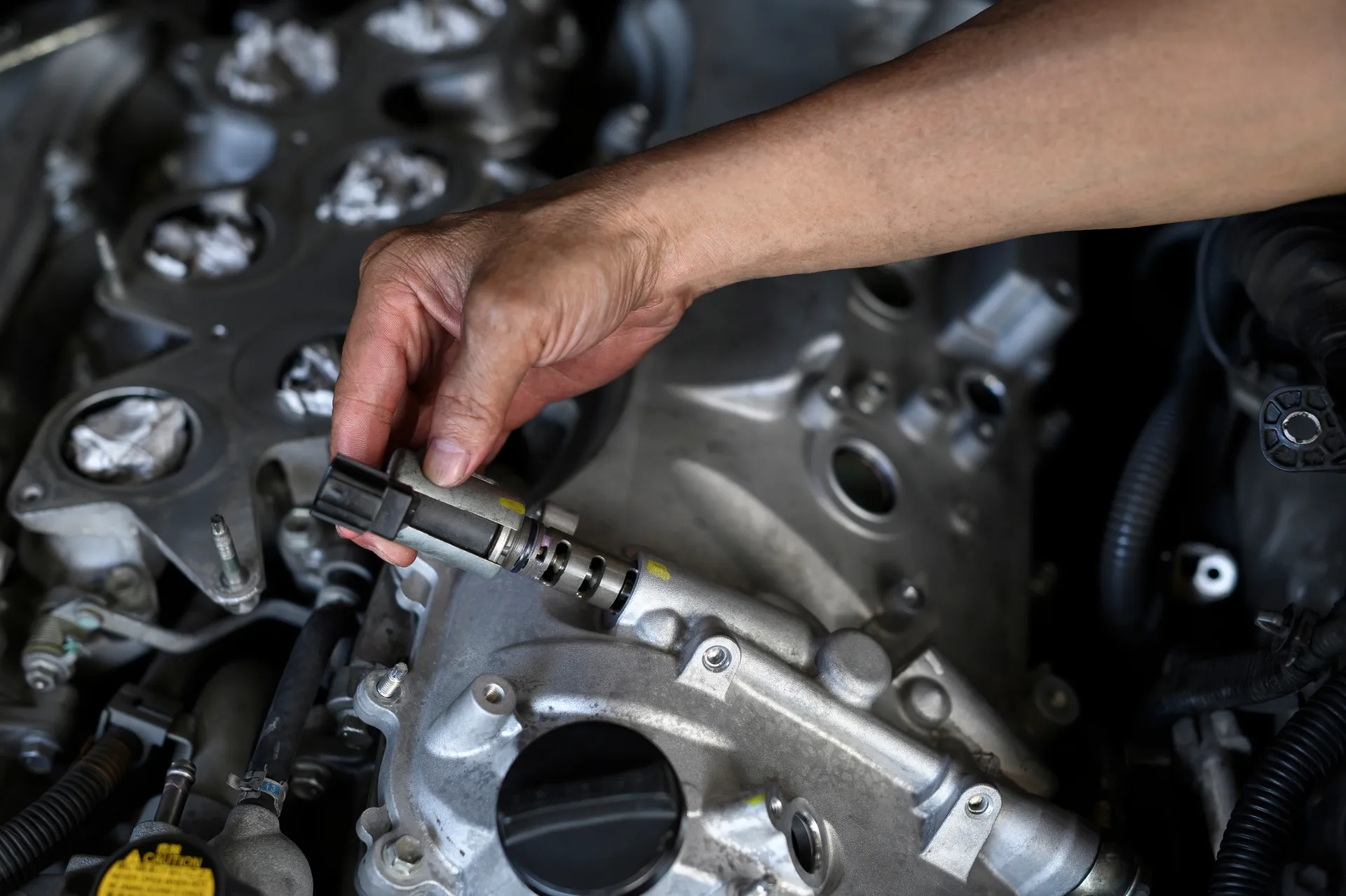
There are also cases where P0008 appears after engine work. If a timing chain, cylinder head, camshaft, or front cover repair was done recently, the mechanical timing should be checked before anyone starts throwing sensors at the car. A missed timing mark or reluctor issue can trigger the code even when the sensors are fine.
A faulty ECM is possible, but it is not where I would start unless the usual mechanical, oil-control, sensor, and wiring checks have already been done.
What Should You Check First?
Start with the codes, not the parts. Use an OBD2 scanner for check engine light diagnosis and look for related timing codes such as P0009, P0016, P0017, P0018, or P0019. Those codes can help show whether the issue is isolated to bank 1 or part of a wider camshaft/crankshaft correlation problem.
Check the engine oil and filter next. Low oil, dirty oil, or the wrong oil viscosity can affect VVT operation and make an engine timing problem worse. If the oil is low or overdue, correct that first, but do not assume an oil change has solved the P0008 code until the vehicle is rescanned and driven.
Listen to the engine on a cold start. A brief metallic timing chain rattle on startup can point toward a stretched timing chain, weak tensioner, or worn guide. If that sound is present, avoid guessing with a camshaft position sensor replacement or crankshaft position sensor replacement before the timing system is checked.
If you are taking it to a shop, tell them exactly what happened: when the light came on, whether the engine rattles after sitting overnight, whether the oil was low, and whether any timing or engine work was done recently. Those details are more useful than just saying, "It has a P0008."
A proper diagnosis may include live camshaft and crankshaft correlation data, freeze-frame review, VVT command testing, wiring checks, and mechanical timing inspection. The order depends on the vehicle and symptoms, but the point is the same: prove the fault before replacing parts.
How Do I Fix Trouble Code P0008?
Fixing trouble code P0008 starts with confirming why the camshaft and crankshaft timing is out of range. A scan tool can show related timing codes and live data, but the repair depends on whether the problem is oil-related, VVT-related, sensor-related, wiring-related, or mechanical.
If the oil is low, dirty, or overdue, an engine oil and filter service is the first thing to correct. Oil-controlled VVT parts need clean oil and steady pressure to work properly. After the oil service, the code should be cleared, the vehicle should be driven, and the system should be checked again. If P0008 returns, the oil was not the whole problem.
If the timing problem points to the variable valve timing system, the repair may involve a VVT solenoid replacement, camshaft actuator repair, oil control valve service, or cam phaser replacement. These repairs are usually less invasive than timing chain work, but they still need testing first.
A stretched timing chain is the repair most owners worry about, and for good reason. When the chain has stretched or the timing chain tensioner and guides are worn, the fix may require a timing chain kit and related timing components. On some engines, this is a labor-heavy job because the front cover and several related parts must come off.
A camshaft position sensor replacement or crankshaft position sensor replacement should only happen after the timing system and wiring have been checked. A new sensor will not fix a stretched chain, a weak tensioner, a broken guide, or mechanical timing that was installed incorrectly.
FAQs About P0008 and Driving Safety
Is it safe to drive with P0008?
It may be safe for a short trip if the engine runs smoothly and there is no rattling, misfire, stalling, hard start, or loss of power. Treat it as a trip to get the car checked, not a code to keep driving on.
How long can you drive with P0008?
There is no safe mileage number. If the car runs normally, keep driving limited and gentle until it is inspected. If the code comes with timing chain noise, hard starts, misfires, or stalling, stop driving and have it checked.
Can low oil cause P0008?
Yes. Low oil, dirty oil, wrong oil viscosity, or low oil pressure can affect VVT operation and make timing problems worse. It may not be the only cause, but oil condition should be checked early.
Is P0008 always a timing chain problem?
No. A stretched timing chain is a common concern, but P0008 can also involve a timing chain tensioner, guide, VVT solenoid, cam phaser, sensor issue, wiring problem, incorrect timing after repair, or oil pressure problem.
Can a bad sensor cause P0008?
A bad camshaft position sensor or crankshaft position sensor can contribute to wrong timing data, but replacing sensors without checking the timing system first is risky. P0008 often needs more than a simple sensor swap.
What’s the difference between P0008 and P0009?
P0008 refers to engine position system performance on bank 1. P0009 is the related code for bank 2. Both point toward a timing correlation problem, but the bank number helps narrow down which side of the engine is involved.
Related Article
Ford Explorer Timing Chain Replacement Cost
How Much Does a Ford Explorer Timing Chain Replacement Really Cost?
May 23, 2026
P0016: A Warning Sign that Engine Power Loss
Learn the P0016 meaning, symptoms, and diagnosis guide at HYR.
Jun 01, 2026
Crankshaft Position Sensor Symptoms: Sensor or Timing Issue?
Mechanic holding a crankshaft position sensor near a vehicle.
Jul 14, 2026