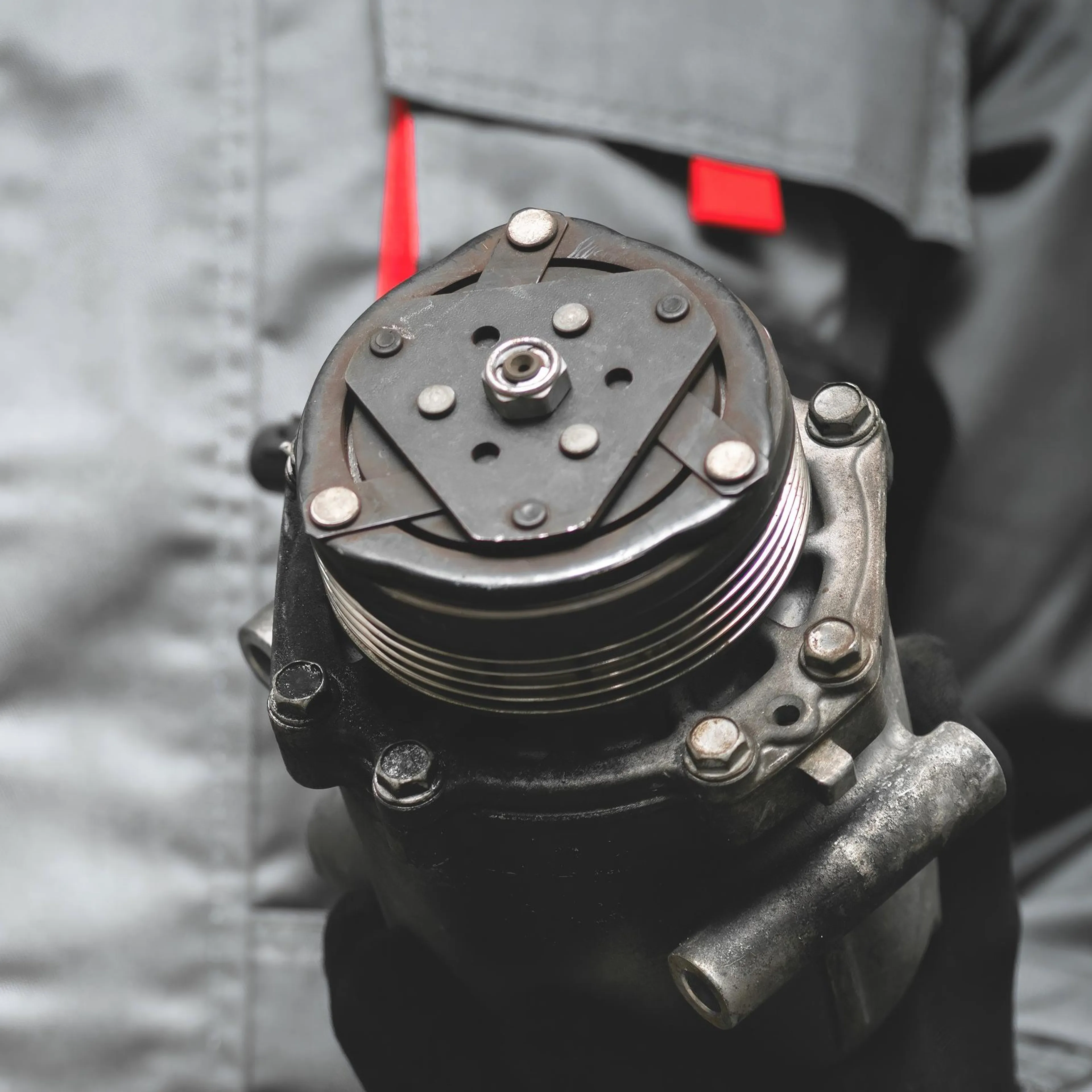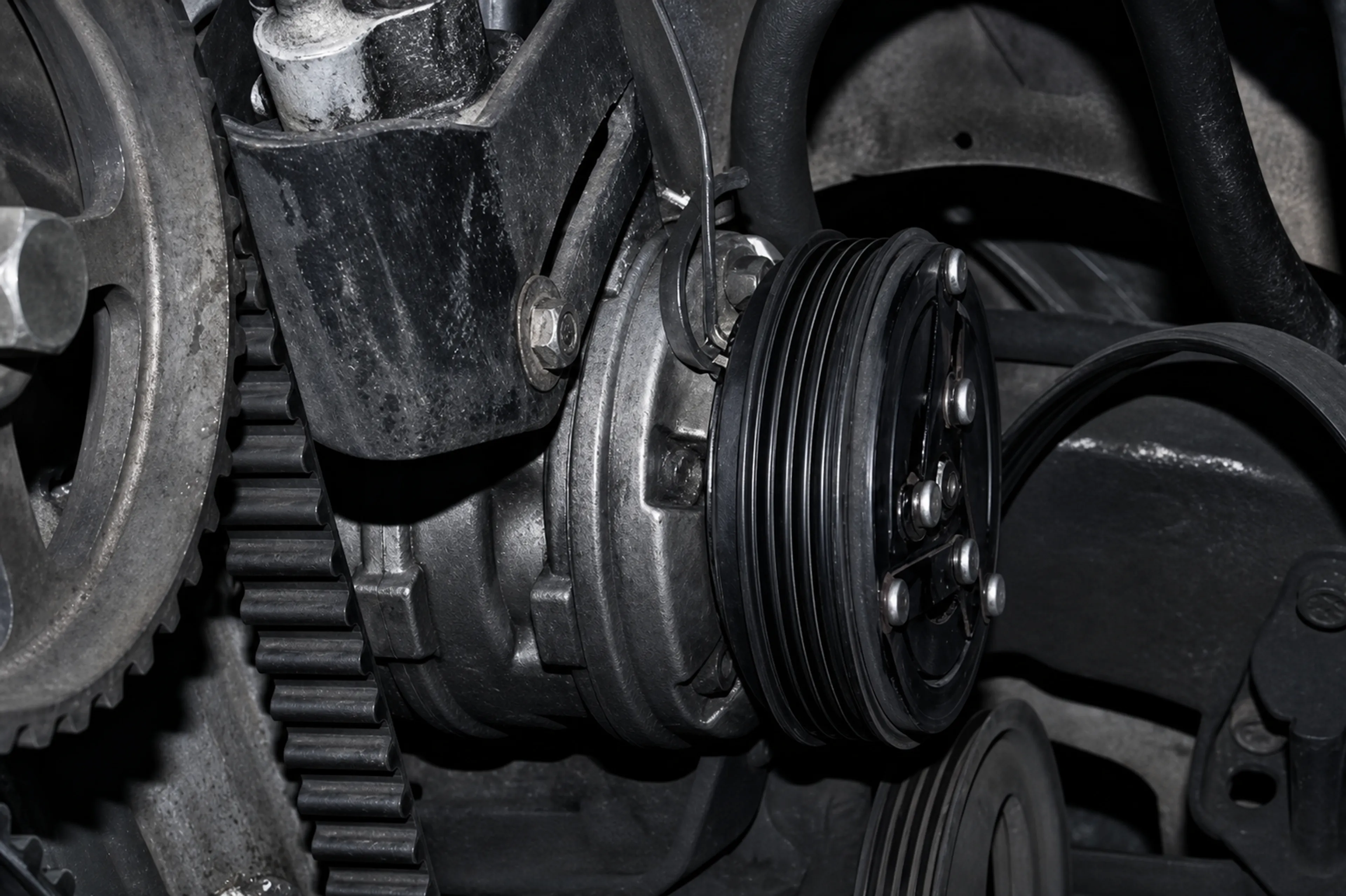
Pay a $1,500 AC compressor repair bill, or deal with a hot summer and a freezing winter drive? There may be a third option: buy the replacement AC compressor yourself and install it on your own.
A car AC compressor replacement cost can look high because the quote often includes more than the compressor. Refrigerant recovery, system recharge, oil, seals, labor, and related AC parts all affect the total. Before choosing between a shop repair and a DIY AC compressor replacement, it helps to know what you’re paying for, when the repair is worth it, and what parts you need to choose correctly.
Car AC Compressor Replacement Cost Breakdown

Most drivers see the total first, but the useful number is the breakdown behind it. A shop quote for AC compressor replacement usually combines the compressor, labor, refrigerant service, and small sealing parts into one repair estimate.
Here’s a typical cost breakdown:
|
Item |
Typical cost range |
What it covers |
|
$250-$900 |
New, remanufactured, OEM, or aftermarket compressor |
|
|
Labor |
$300-$700 |
Removing the old compressor, installing the new one, checking belt fitment and connections |
|
Refrigerant recovery and recharge |
$150-$300 |
Recovering old refrigerant, vacuum testing the system, adding the correct refrigerant charge |
|
Seals, O-rings, oil, and small parts |
$30-$150 |
Parts needed to seal and lubricate the AC system |
|
Related parts, if needed |
$100-$500+ |
Clutch, condenser, receiver drier, expansion valve, or contaminated components |
On many vehicles, the full car AC compressor replacement cost lands around $800 to $1,500. Luxury models, tight engine bays, rear AC systems, hybrid vehicles, or compressor failure that sends debris through the system can push the quote higher.
If you’re comparing a shop estimate with a DIY repair, labor and parts markup are usually the biggest difference. Buying the replacement AC compressor yourself can make the cost easier to control, especially if you know whether your car needs a compressor with clutch, a specific oil type, or related AC components replaced at the same time.
Why Is Car AC Compressor Replacement So Expensive?
AC compressor replacement is expensive because the job goes beyond removing one part and bolting on another. The compressor is part of a sealed refrigerant system, which means the refrigerant has to be recovered, the system opened safely, the new compressor installed with the right oil and seals, and the AC vacuum-tested and recharged before it can blow cold again.
Labor changes the bill fast. Some compressors are easy to reach from underneath the engine bay; others are buried behind splash shields, belts, brackets, engine covers, or nearby components. More access work means more labor time.
The cost can climb even more when the old compressor fails internally. Metal debris can travel through the AC system and contaminate the condenser, receiver drier, expansion valve, or lines, leaving the new compressor at risk if the system isn’t cleaned up properly. That is also why many drivers start looking at the part price first, hoping the repair can be brought back under control.
Buying an AC Compressor Yourself? Don’t Let the Low Price Mislead You
Once you start shopping for the part yourself, the price gap can look tempting. The $180 compressor and the $480 compressor may both say they fit your car. They may not be the same part. That is why the AC compressor part cost can be misleading.
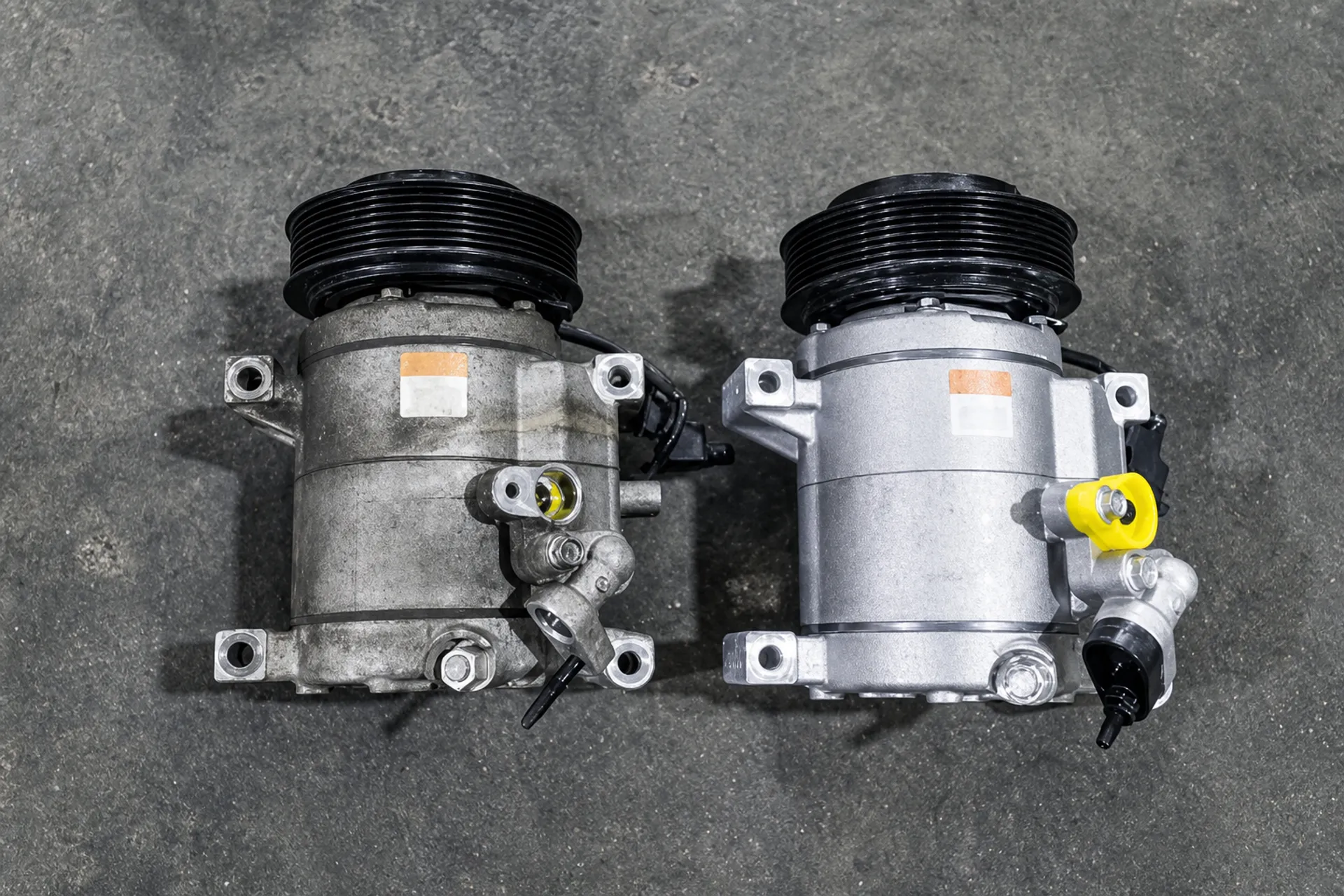
One might be a replacement AC compressor with clutch, pulley, and coil already installed. The other might be a bare compressor that needs parts swapped over from the old unit. That difference matters if your old clutch is already noisy, slipping, or seized.
Fitment is where cheap parts cause the most trouble. A compressor can look right online and still be wrong once it’s in your hands, especially if the electrical connector, pulley groove count, mounting points, hose ports, or pulley offset don’t match your original unit. Check the vehicle fitment, engine size, compressor style, clutch type, refrigerant type, and oil requirement before price becomes the deciding factor.
Quality is harder to see in a listing photo. New OEM, aftermarket, and remanufactured compressors can all appear in the same search results, but they don’t carry the same risk. Look for clear compatibility notes, a real warranty, and details on whether the compressor is pre-filled with oil.
This is also where AC compressor clutch vs compressor replacement matters. If the clutch is the only failed part, replacing the entire compressor may not always be the cheapest route. If the compressor itself is damaged internally, a clutch-only fix won’t solve the problem.
One of the first choices that affects fitment and reliability is whether the compressor comes with the clutch.
Do You Need an AC Compressor With Clutch?
Not every AC compressor replacement needs a new clutch. The question is whether the old clutch is still good enough to reuse.
If the old clutch assembly is still working, the pulley spins smoothly, the coil engages, and the clutch face is not burned or worn unevenly, it may be reusable on a bare compressor that matches it exactly.
You do need an AC compressor with clutch when the old clutch is burned, seized, noisy, slipping, or damaged during removal. The same goes for a clutch with melted wiring, bearing play, heat marks, or a pulley that does not sit squarely. In those cases, the clutch is already part of the problem.
The gray area is where judgment matters. If the compressor locked up, overheated, or left debris around the front of the unit, reusing the old clutch is a gamble. A replacement AC compressor with clutch is usually the cleaner choice when you cannot trust the old clutch assembly.
Signs Your Car AC Compressor Needs Replacement
Before buying any compressor, make sure the old one is really the problem. A weak AC system gets blamed on the compressor all the time, but car AC blowing hot air can also come from low refrigerant, a pressure switch, a clogged condenser, a blown fuse, or a wiring issue.
Noise changes the conversation. A quick clutch click is normal; grinding, rattling, or rough bearing noise from the compressor area is not. If the clutch engages and the noise keeps going, I’d stop treating it like a simple clutch problem.
A seized compressor is harder to argue with. The pulley may drag against the belt, the belt may squeal, or the engine may stumble the moment the AC turns on. Oil around the compressor body, hose connection, or front seal adds another warning sign, since refrigerant oil can leave with the refrigerant and run the compressor short on lubrication.
Debris is the point where saving the old unit stops making sense. Once the compressor breaks down internally and sends metal through the AC system, a recharge or a few new seals won’t fix the damage already moving through the lines. At that stage, replacing the compressor becomes less of a guess and more of a way to protect the rest of the AC system.
Is It Worth Replacing the AC Compressor?
Replacing the AC compressor is worth it when the rest of the car is still in good shape and the AC system can be repaired cleanly. A newer vehicle, a daily driver, or a car you plan to keep through another summer usually makes the decision easier. Comfort matters, but so does resale value; a car with working AC is simply easier to live with and easier to sell.
The math changes on an older car. If the repair quote is close to the value of the vehicle, or the AC system needs a compressor, condenser, receiver drier, and major cleanup, the decision deserves a second look. At that point, you’re not just asking whether the compressor can be replaced. You’re asking whether the car is worth putting that much AC money into.
DIY can change the equation, but only if you already know how to replace a car AC compressor safely and correctly. That means understanding what has to be removed, how the refrigerant should be handled, which oil and seals the system needs, and how the AC will be recharged after installation. Saving on labor makes sense only when the repair is familiar enough to do without guessing.
Can You Drive With a Bad AC Compressor?
In most cases, you can still drive with a bad AC compressor if the pulley spins freely and the only problem is no cold air. Once the compressor starts to seize, grind, smoke, or make the serpentine belt squeal, the belt, tensioner, alternator, and other belt-driven parts can be affected.
A seized compressor can turn an AC problem into a belt problem. Since the compressor runs off the serpentine belt, a locked pulley can overheat the belt, damage the belt ribs, stress the tensioner, and keep other belt-driven accessories from working properly.

That can lead to a snapped belt, loss of alternator output, battery warning lights, overheating on some engines, or a sudden loss of power steering assist on vehicles with belt-driven steering pumps. Warm air is uncomfortable; a locked compressor can create a much bigger drivability problem.
FAQs About Car AC Compressor Replacement Cost
Can I buy my own AC compressor and have it installed?
Yes, but fitment matters. Match the year, make, model, engine size, pulley, connector, clutch setup, refrigerant type, and oil requirement before buying. Some shops may not install customer-supplied parts, so confirm that before ordering.
Do you have to replace the condenser when replacing the AC compressor?
Not always. The condenser is more likely to need replacement if the old compressor failed internally and sent metal debris through the AC system. If the compressor failed from a leak or clutch issue without contamination, the condenser may not need to be replaced.
Does a new AC compressor come with oil?
Some replacement AC compressors come pre-filled with oil, while others ship dry or with only assembly oil. Always check the product notes and your vehicle’s oil capacity before installation, because too much or too little oil can damage the new compressor.