
Is your car shaking and losing power?
A flashing check engine light, rough idle, or sudden hesitation under acceleration can point to a serious misfire, and a single failing ignition coil may be responsible. Bad ignition coil symptoms also resemble worn spark plugs and fuel-system faults, so the way the engine behaves offers more useful clues than the warning light alone.
Bad Ignition Coil Symptoms
An ignition coil should move high on the suspect list when an occasional engine stumble develops into repeated misfires, rough idle, weak acceleration, or starting trouble. The more of these symptoms that appear together, especially on the same cylinder, the less likely the problem is to be a harmless one-time misfire.
At first, the engine may shake briefly while idling or hesitate when the accelerator is pressed, then return to normal before the driver has time to make sense of it. Heat sometimes brings the problem out: the car runs smoothly after a cold start, begins misfiring several minutes later, and works again after the coil cools down.
With the coil no longer producing a consistent spark, the affected cylinder misses more often and the engine loses its smooth rhythm. Vibration becomes easier to feel through the steering wheel or seat, acceleration turns uneven, and the car starts to feel short on power. These symptoms are no longer limited to an occasional stumble and may appear during normal driving as well as under heavier engine load.
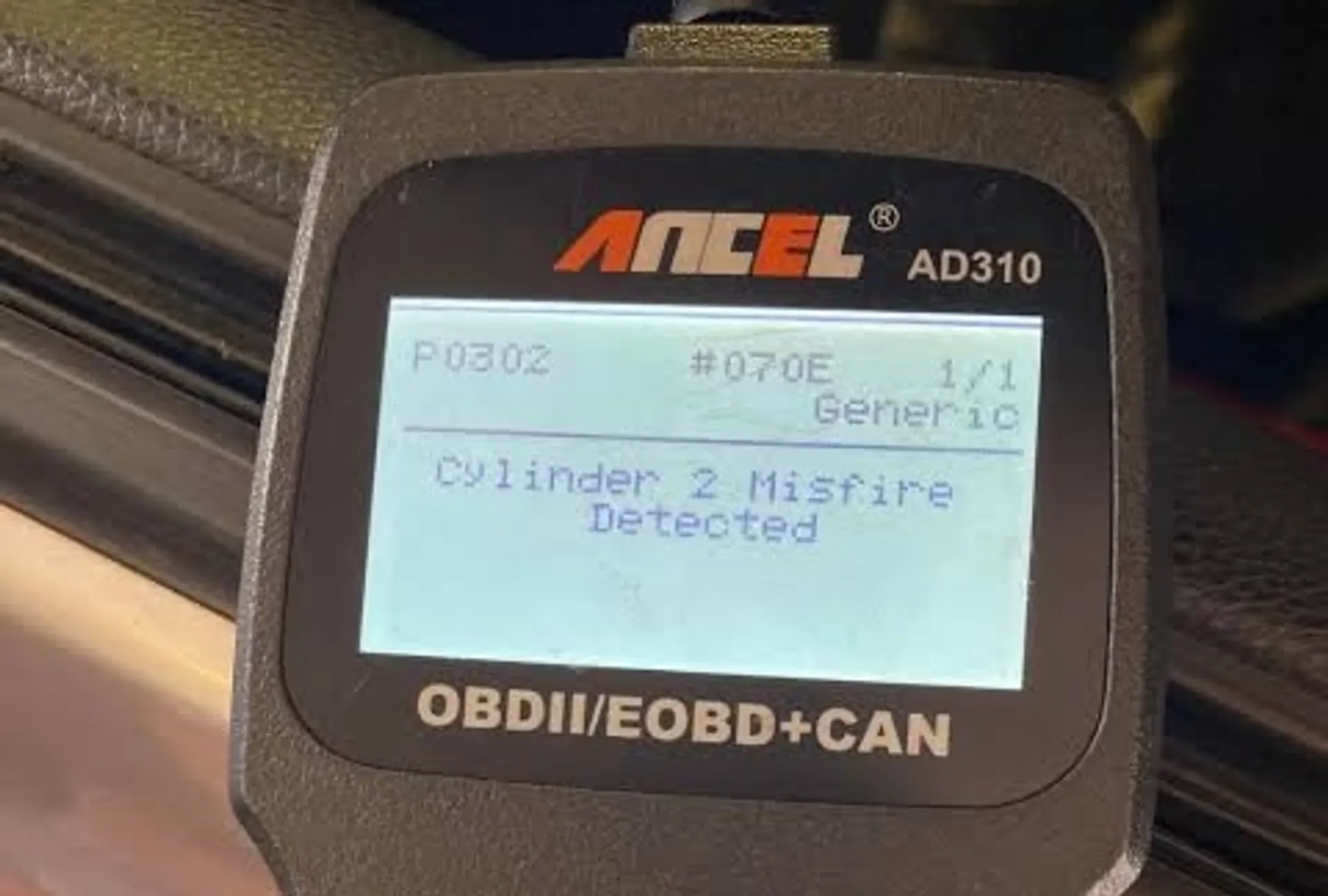
A coil that has weakened further may cause long cranking, a rough start, low-speed stalling, or difficulty restarting a warm engine. Repeated misfires also leave unburned fuel in the exhaust, which produces a gasoline smell and pushes fuel consumption higher. The check engine light may remain on or begin flashing, while a scan often reveals P0300 or a cylinder-specific misfire code from P0301 through P0308.
That combination makes a failing ignition coil a strong possibility, but it still isn’t a final diagnosis. Worn spark plugs, damaged wiring, faulty injectors, vacuum leaks, and low compression can create many of the same symptoms and need to be ruled out before the coil is replaced.
What Should You Check When These Symptoms Appear?
Don’t replace an ignition coil from symptoms alone. The first job is to identify which cylinder is misfiring, then find out whether the fault follows the coil or stays with that cylinder.
Start by scanning the vehicle for trouble codes. P0301 points to cylinder one, P0302 points to cylinder two, and the same pattern continues for the remaining cylinders; P0300 records a random or multiple-cylinder misfire. These codes narrow the search, but they identify where the misfire was detected rather than confirming that the ignition coil caused it.
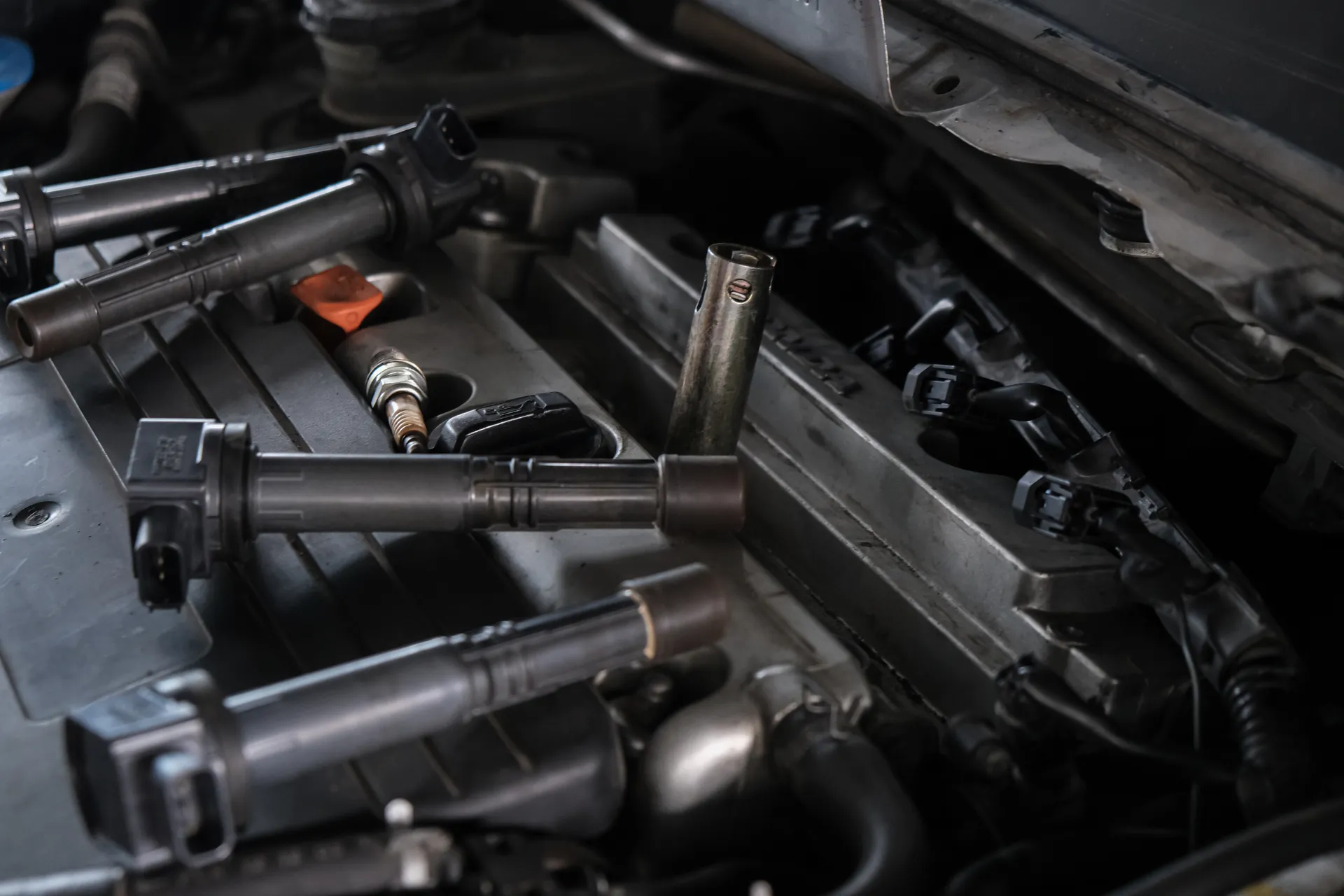
With the engine switched off and cool, inspect the suspect coil, its electrical connector, and the surrounding wiring. A loose terminal, cracked coil housing, torn rubber boot, corrosion, or visible burn marks may explain the weak spark. Pull the coil and check the spark plug well for engine oil or water, since either one can interfere with the connection between the coil and plug. The spark plug itself also needs attention: excessive gap, worn electrodes, heavy deposits, or a cracked insulator can place extra demand on the coil and create the same misfire.
An ignition coil swap test provides a much stronger answer when two cylinders use matching coils. Move the suspect coil to a known-good cylinder, clear the codes, and run the engine again; if the misfire code moves with the coil, the coil has effectively identified itself as the problem.
When the misfire remains on the original cylinder, replacing the coil is unlikely to fix it. The next checks should cover the spark plug, coil wiring, fuel injector, vacuum leaks near that cylinder, and compression.
How Serious Are Bad Ignition Coil Symptoms?
Repeated misfires make a failing ignition coil a serious engine problem, not just a source of rough idle. Even while the car still runs, unburned fuel can overheat the catalytic converter, and continued spark loss may lead to substantial power loss, stalling, or an engine that won’t restart.
Fuel entering the affected cylinder still has to leave somewhere when combustion fails. It passes into the exhaust and may burn inside the catalytic converter, forcing the converter far above its normal operating temperature. Enough heat can melt or break apart the material inside, turning an ignition coil fault into a much more expensive exhaust repair.
The urgency becomes clearer through the way the engine behaves. Occasional hesitation with a solid check engine light suggests an intermittent misfire, while constant shaking, hard starting, a strong gasoline smell, and obvious power loss show that the cylinder is missing repeatedly. A flashing check engine light is the strongest warning because the engine computer has detected a misfire severe enough to threaten the catalytic converter. Stalling or difficulty restarting means the fault is already interfering with the engine’s ability to keep running.
Fuel economy and emissions also worsen while the problem continues. Understanding how an ignition coil works helps explain why weak or interrupted spark can cause these symptoms, but it still does not prove that the coil itself has failed. The spark plug, wiring, and fuel injector must also be considered before the coil is replaced.
Bad Ignition Coil vs. Bad Spark Plug: How Can You Tell?
A bad ignition coil and a worn spark plug produce many of the same symptoms, so rough idle, hesitation, and a misfire code can’t identify the failed part by themselves.
|
What You Notice |
Bad Ignition Coil |
Bad Spark Plug |
|
Misfire pattern |
May appear after the coil heats up |
May become more consistent as the plug wears |
|
Visible damage |
Cracked housing, torn boot, burn marks, or carbon tracking |
Worn electrode, excessive gap, deposits, cracked ceramic, or oil fouling |
|
Replacement interval |
Usually replaced after failure |
Replaced at a scheduled mileage |
|
Swap test |
Misfire follows the coil |
Misfire stays unless the plug is also moved |
Start with the cylinder named by the misfire code and inspect both parts. Move the suspect coil to a working cylinder; if the code follows it, the coil is failing. If the misfire stays behind, move or replace the spark plug next. A fault that remains on the same cylinder after both tests points toward the wiring, fuel injector, or low compression.
What Else Can Cause Similar Symptoms?
Bad ignition coil symptoms overlap with several fuel, air, electrical, and mechanical problems. Use the main symptom to decide what should be checked next.
|
Symptom |
Other Problems to Check |
|
Rough idle and vibration |
Worn spark plugs, vacuum leaks, dirty throttle body, faulty injectors, worn engine mounts |
|
Loss of power |
Low fuel pressure, clogged catalytic converter, timing problems, low compression |
|
Hesitation during acceleration |
Weak fuel pump, dirty MAF sensor, clogged injector, throttle or boost leaks |
|
Hard starting |
Weak battery, low fuel pressure, crankshaft or camshaft position sensor faults |
|
Stalling |
Fuel pump failure, crankshaft position sensor faults, vacuum leaks, charging problems |
|
Gasoline smell or poor fuel economy |
Leaking injector, rich air-fuel mixture, oxygen sensor faults, external fuel leaks |
A cylinder-specific misfire that stays in place after the coil and spark plug are moved points toward the injector, wiring, or low compression. When several cylinders are affected, check systems shared by the whole engine, including fuel pressure, airflow measurement, timing, and exhaust restriction.
FAQs About Bad Ignition Coil Symptoms
Can You Drive With a Bad Ignition Coil?
A car may still run with a weak ignition coil, but an active misfire can cause sudden power loss and damage the catalytic converter. Stop driving if the engine shakes constantly, smells strongly of fuel, or the check engine light flashes.
What Causes an Ignition Coil to Fail?
Heat, vibration, moisture, oil inside the spark plug well, damaged wiring, and the extra demand from worn spark plugs can all shorten an ignition coil’s life.
Should You Replace One Ignition Coil or All of Them?
Replace only the failed ignition coil when the others test correctly. Age alone does not prove the whole set is bad. A full set becomes more reasonable when several original coils have failed close together.
How Long Do Ignition Coils Last?
Ignition coils don’t have a universal replacement interval; many remain in service beyond 100,000 miles, while heat, spark plug condition, oil leaks, and part quality can shorten their life.
Will a Bad Ignition Coil Always Set a Trouble Code?
Not always. An intermittent coil may cause brief hesitation before the check engine light turns on, although a pending code or rising misfire count may already be stored.
Can One Bad Ignition Coil Affect More Than One Cylinder?
On most coil-on-plug systems, each ignition coil serves one cylinder, so a failed coil normally causes a single-cylinder misfire. Older coil-pack systems may use one coil to fire two or more cylinders, allowing one failure to affect multiple cylinders.
Related Article
How Does an Ignition Coil Work? Voltage, Spark, and Coil Types
Modern car engine bay with electrical systems that control ignition coil firing timing
Mar 03, 2026

Toyota Camry Ignition Coil Symptoms: Signs of a Failing Coil
A close-up of a finger pressing the red hazard warning light button in a car
May 19, 2026