
A Civic’s cabin air filter replacement interval is typically 1-2 years, for drivers who average 12,000-15,000 miles per year. It’s also recommended that you inspect and replace the filter in spring or before summer AC use to improve the cabin airflow. Why is the cabin air filter important? What signs indicate that it’s time to replace? In this guide, we’ll explain detailed information about the Civic’s cabin air filter: its functions, symptoms, replacement cost, and ways to replace it.
What Does a Cabin Air Filter Do
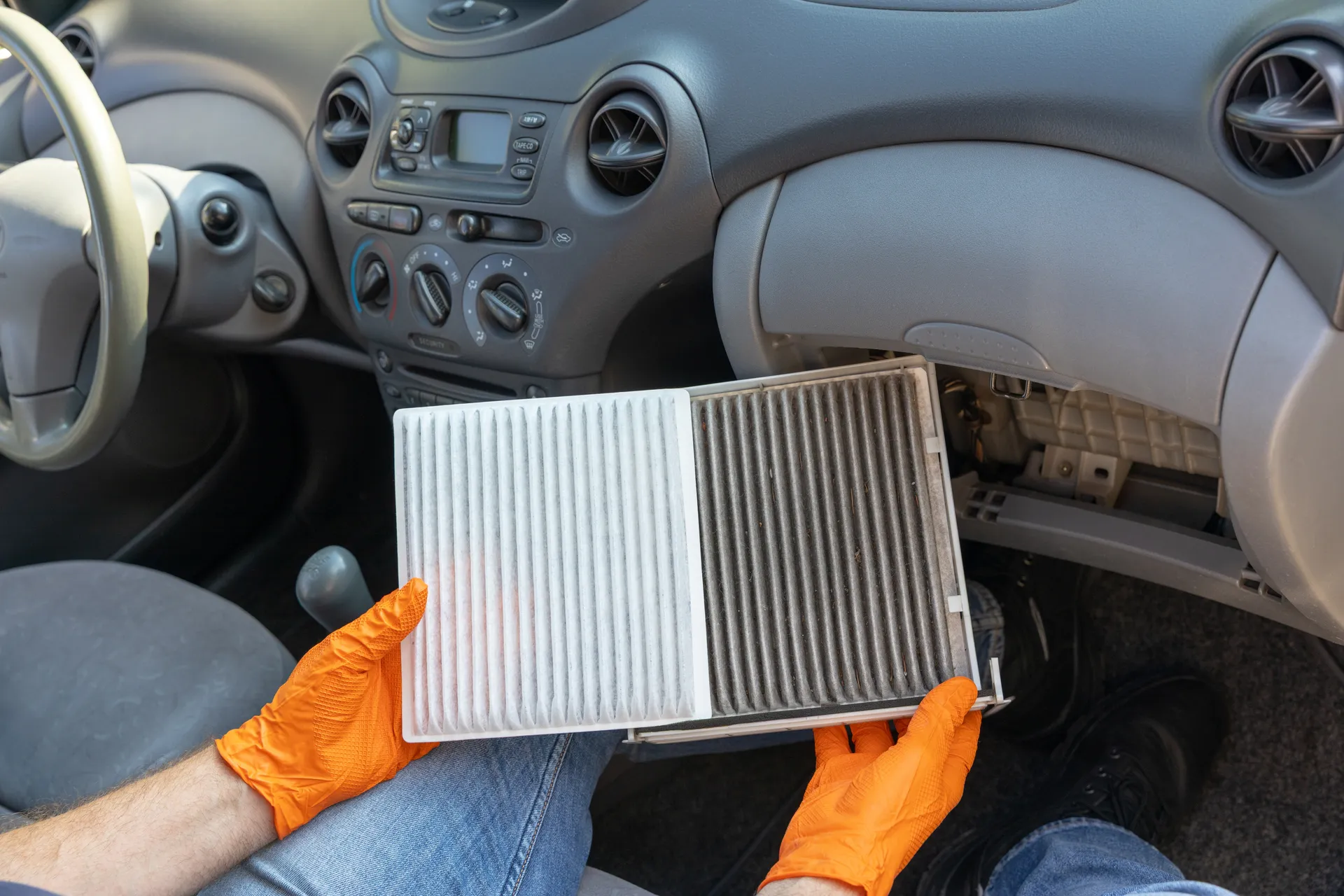
It's a crucial component that filters out dust, debris, pollen, smoke, and mold spores from the outside air, improving cabin air quality. When the HVAC system is running, air flows through the pleated paper that traps these airborne particles and reduces allergens. Some Civic cabin air filter also uses activated carbon to help absorb smoke and exhaust from incoming air. This simple but essential part also helps the blower motor or evaporator function properly since it keeps the air cleaner. However, it could become clogged and ineffective over time.
What Shortens the Lifespan of a Civic Cabin Air Filter
Urban air quality, traffic conditions, and even the filter quality are major factors that affect the lifespan of a cabin air filter. The Honda Civic is one of the most commonly used vehicles for daily city commuting. Heavy stop-and-go traffic and polluted air can cause the absorption capacity of carbon media to decrease over time.
When to Change Cabin Air Filter
If you notice the following symptoms, it's time for you to replace it.
Unusual Noise from HVAC System
The noise is a common sign that indicates the filter needs replacement. In a compact sedan like the Honda Civic, restricted airflow may become noticeable. And a dirty air filter could increase strain on the blower motor to raise the fan speed. You’ll find loud noise, like whistling, humming, or rushing air.
Weak Airflow
When the air filter is dirty, it may restrict airflow through the blower motor and evaporator, leading to reduced HVAC performance. And it also causes weaker defrost, especially on rainy days.
Unpleasant Odors
When the filter functions ineffectively, mold spores, smoke, and exhaust still remain in the cabin air, recirculating inside the cabin. Moisture buildup may cause mold growth around the evaporator surface. That may produce musty smells, affecting the driving experience.
Allergic Reactions
Unfiltered pollen, airborne particles, and PM2.5 inside the cabin can significantly reduce driving comfort for Civic owners with allergies, rhinitis, or sensitive respiratory systems. A clean cabin air filter helps block these contaminants and improves in-car air quality.

How to Change the Cabin Air Filter
Most Civics’ cabin air filter is located in the glove box on the passenger side, making it straightforward to access and replace it. If signs of a clogged air filter occur, it’s time for you to change the filter.
Step 1: How to Choose the Correct One
The replacement filter should fit the original airflow orientation, as it depends on filtration efficiency. You’d better choose the one’s size and shape, length, width, and thickness that is similar to OEM. Also, choosing the activated carbon type of air filter matches the Civic, as it could balance airflow and odor control for daily commuting. Look out, some HEPA-style ones may slightly restrict airflow for Civic models.
Step 2: Replacement Preparation
·Gloves (keep your hands clean), pliers (may remove old clips)
· Vacuum cleaner or damp cloth (clean the filter compartment)
·A new cabin air filter
·A new filter cover: if its clips are aging, you may change the cover as well.
Make sure the workspace is clean and free of clutter.
Step 3: Get Access to Filter
· Squeeze the side tabs of the glove box under the dashboard and lower the box or take it down. After that, there is a black or gray filter housing near the blower motor.
·Press the clips on both sides of the filter housing and remove the filter cover: using a pair of pliers if you can’t handle it directly.
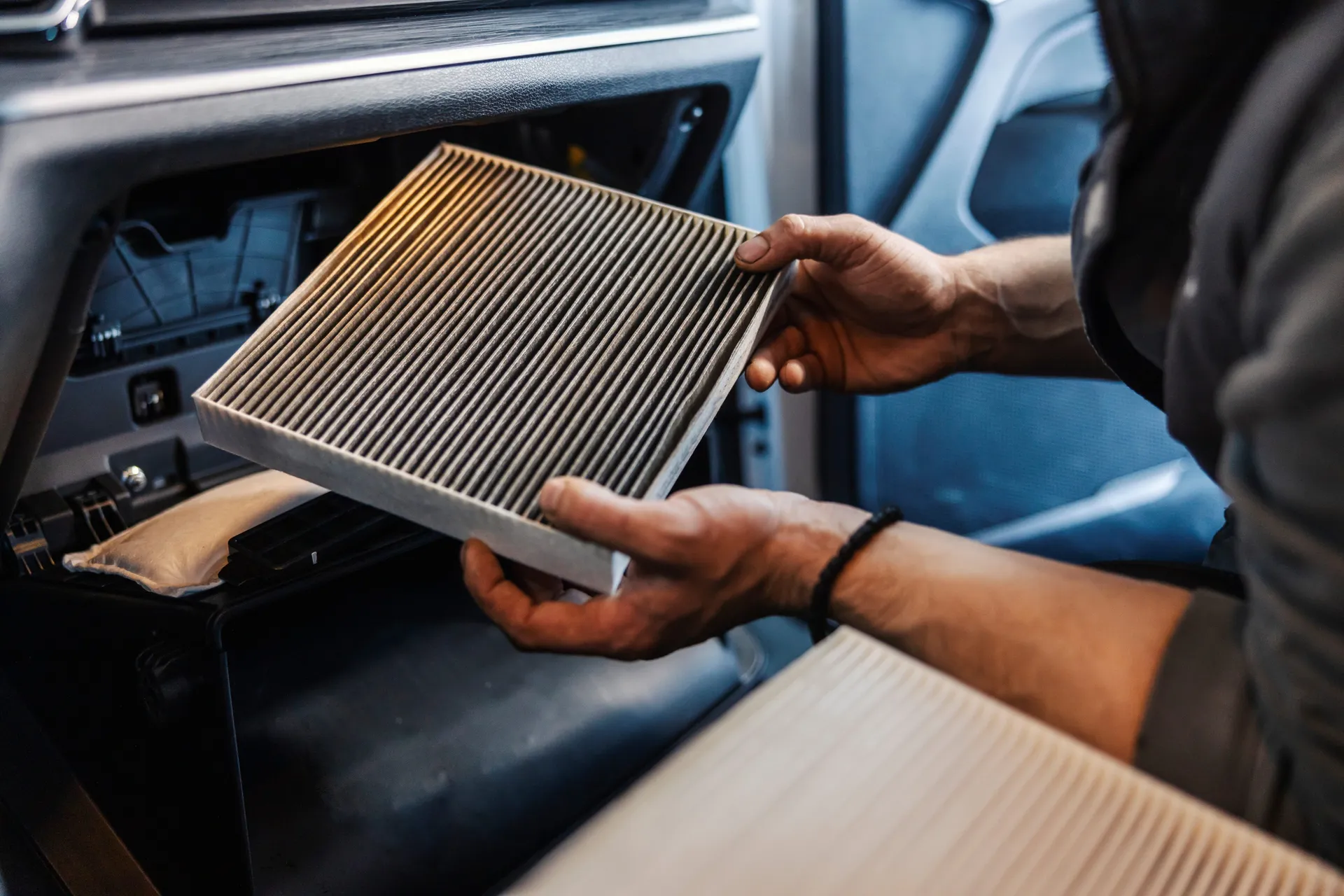
Step 4: Remove the Old Filter
·Note the airflow direction. If you had never changed the filter, “Up↑” indicates that this side of the filter is facing up; aftermarket filters typically show the “air flow, ↓” which means the air flow direction. For most Civic vehicles, the direction of the air flowing through the HVAC system is from top to bottom. So, in the “air flow ↓” ones, the arrow towards the side that should face down.
·Remove the filter. You can take it out directly after ensuring the correct orientation.
·Clean the housing inside. Use the vacuum cleaner or a damp cloth to clean the dust, leaves, or other contaminants.
Step 5: Insert the New Filter
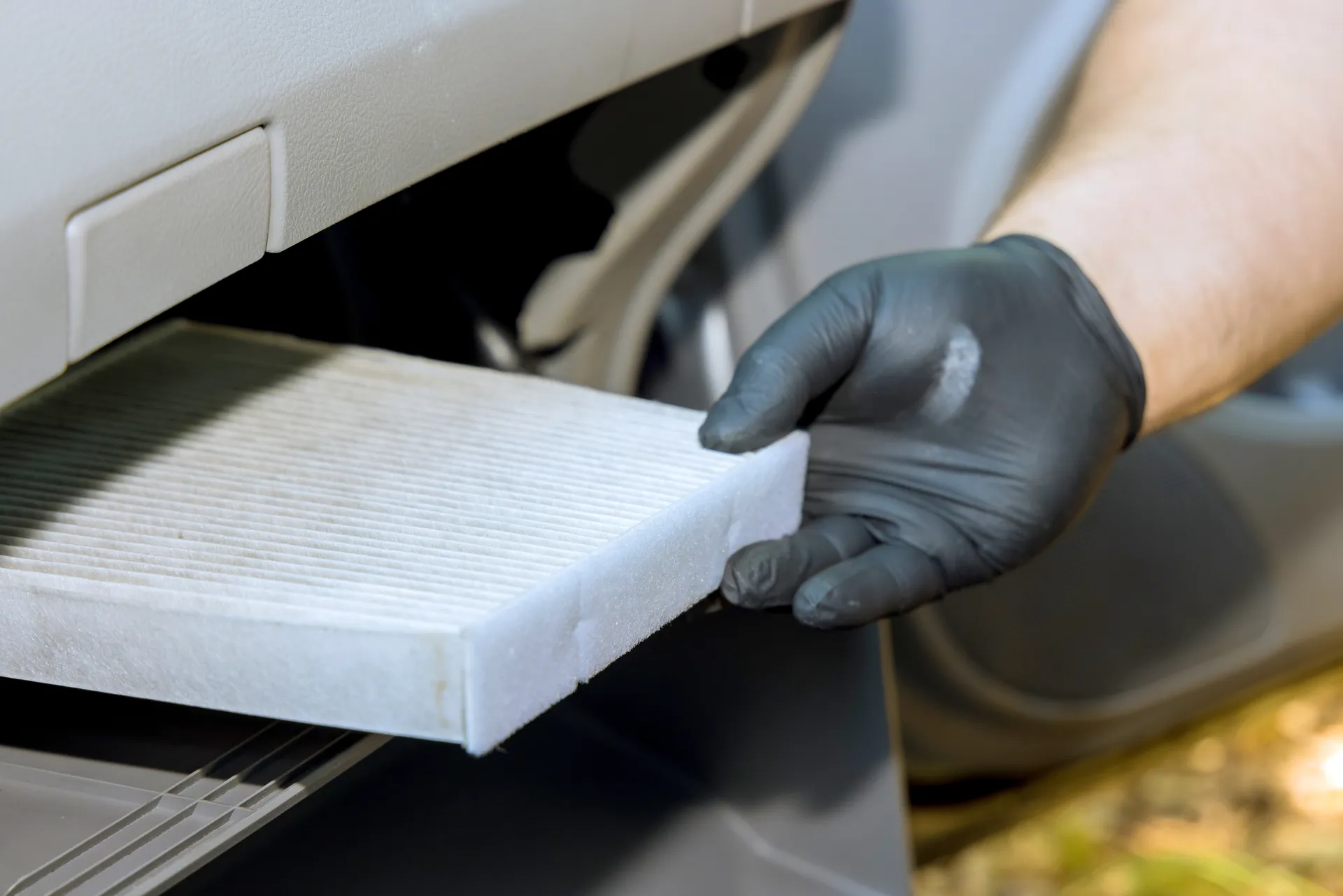
·Put the filter in the housing as follows, following the correct direction.
·Reinstall the cover. Make sure it’s sealing the filter, and there is no airflow out of the filter housing.
Step 6: Reinstall the Glove Box
Clip the glove box and make sure it opens or closes properly.
Step 7: Test the Filter Performance
Start the HVAC system and inspect it for unusual noise and unpleasant odors.
Conclusion
For most Honda Civic models, the cabin air filter should be replaced every 12,000-15,000 miles or 1-2 years. However, if you notice signs of a dirty filter, it may be time for you to change it. Most Civic air filters are easy to access through the glove box. So, replacing the filter regularly helps you maintain clean and fresh air in the cabin.
FAQs
Can You Clean the Civic’s Cabin Air Filter?
No. For most Civic vehicles, it's typically made of multiple layers of pleated paper or activated carbon. Compressed air or a filter cleaner may affect its filtration efficiency. Check the Civic owner’s manual if you can clean it by yourself.
What happens if you install the cabin air filter incorrectly?
Because of poor sealing, there may be free space for the dust, pollen, and allergens to bypass the air ducts, reducing airflow and cabin comfort. Over time, the dust may build up around the blower motor and evaporator. You may find unusual noises and a moldy smell sooner after improper installation.
Why does the Civic cabin air filter Collapse?
Besides a low-quality cabin air filter, the compact glove box may compress the edge of aftermarket filters slightly. However, in most cases, it could filter out efficiently as long as the filter is installed in the correct airflow direction and matches the proper dimensions for the vehicle.
Related Parts


Related Article
How to Replace Door Lock Actuators: A DIY Step-by-Step Guide
A closer look at door lock actuator faults and the replacement process.
Feb 27, 2026
How to Replace an AC Compressor Safely: A Step-by-Step Guide
Replace the bad AC compressor to restore its cooling performance.
May 05, 2026
How to Install Timing Belt: Step-by-Step Guide
Remove a belt? Align with two timing marks? Release the tension? Read this guide before replacement
Jun 01, 2026
How to Replace a Throttle Body: Step-by-Step Guide for DIYers
Replacing a throttle body may seem complicated, but most DIYers can complete the job.
Jul 17, 2026